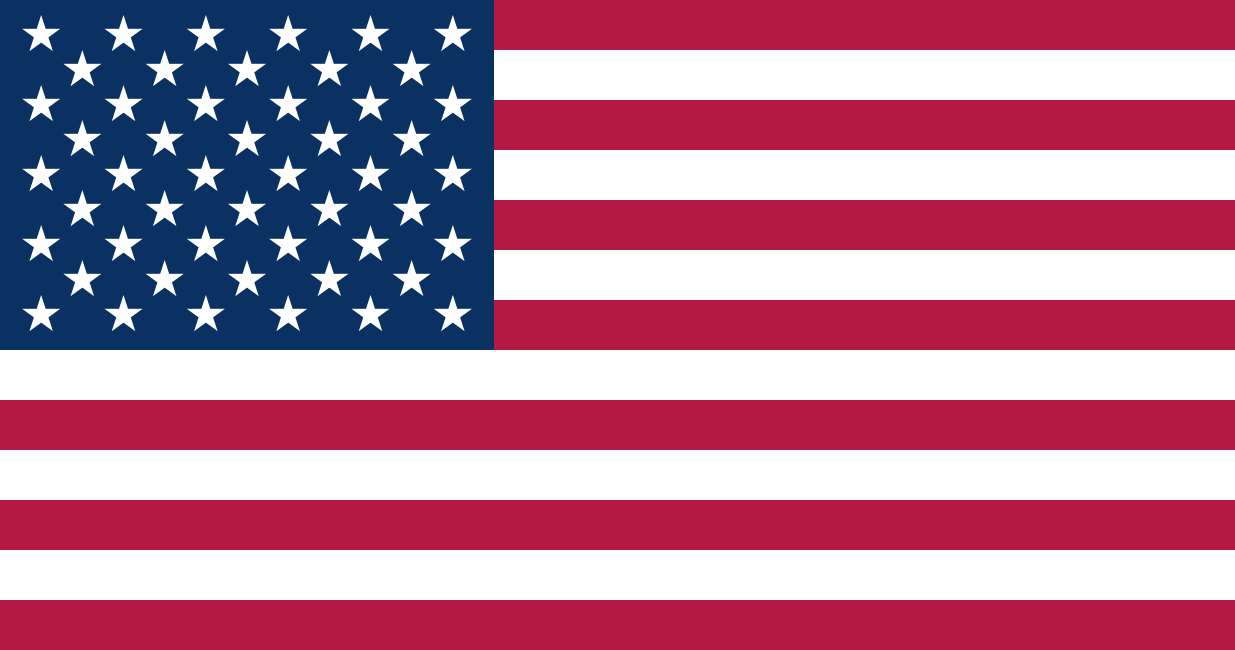
 United States
Quick answerThe United States is a country in North America, with a population of 341,784,857 (2025). Its capital is Washington, D.C., its official language is English, and its currency is the United States dollar (USD). It covers 9,833,520 square kilometres (3,796,742 square miles), and its time zone is America/New_York.
The United States is the third-largest country in the world by population, home to about 341.8 million people. Its capital is Washington, D.C., its largest city is New York, and its official language is English. The country spans a continent, from the Atlantic Ocean to the Pacific, and its currency is the U.S. dollar.
Key facts
| Capital | Washington, D.C. |
|---|---|
| Population | 341,784,857 (2025) · 341.8 million |
| Population density | 37.4 people per km² (land area) |
| Area | 9,833,520 km² (3,796,742 sq mi) total · 9,147,590 km² (3,531,903 sq mi) land |
| Official language | English (official) |
| Currency | United States dollar (USD, $) |
| Time zones | America/New_York, America/Chicago, America/Denver, America/Los_Angeles, America/Anchorage, Pacific/Honolulu |
| Government | Federal presidential republic |
| Coastline | 19,924 km |
| Highest point | Denali, 6,190 m |
| Life expectancy | 79 years (2024) |
| Calling code | +1 |
| Driving side | Right |
| Internet domain | .us |
Overview
The United States covers 9,833,520 square kilometres, making it the fourth-largest country in the world by total area. It stretches from the Atlantic Ocean in the east to the Pacific Ocean in the west, with Canada to the north and Mexico to the south. Alaska, in the far north-west, is separated from the rest of the country by Canada, and Hawaii is an island chain in the Pacific. The landscape ranges from the deserts of the south-west to the Rocky Mountains and the Great Lakes, and Denali in Alaska rises to 6,190 metres, the highest point in North America. The country also has about 19,924 kilometres of coastline, on the Atlantic, the Pacific and the Gulf of Mexico.
About 341.8 million people lived in the United States in 2025, according to the U.S. Census Bureau, making it the third most populous country in the world. Most Americans live in cities and suburbs: New York, the largest city, had about 8.6 million residents in 2025, followed by Los Angeles with about 3.9 million and Chicago with about 2.7 million. English is the official language, and Spanish is widely spoken as a second language. Life expectancy at birth was 79.0 years in 2024, according to the Centers for Disease Control and Prevention.
The United States is a federal presidential republic of 50 states and the District of Columbia, the federal district that holds the capital, Washington, D.C. The president is head of state and head of government, and Congress makes federal law. The country has the world's largest economy, worth about $32.6 trillion in 2026 according to the International Monetary Fund, built on services, technology, manufacturing, agriculture and energy. American culture, from Hollywood films and jazz to fast food and the internet, is known around the world, and the country is home to landmarks such as the Statue of Liberty, the Grand Canyon and the Golden Gate Bridge.
Notable facts
- The United States covers 9,833,520 square kilometres, making it the world's fourth-largest country by total area, behind Russia, Canada and China.
- Denali, in Alaska, rises to 6,190 metres, the highest point in North America.
- The United States had a population of 341,784,857 in 2025, according to the U.S. Census Bureau, making it the third most populous country in the world.
- New York City, the largest city, had about 8.6 million residents in 2025, while its metropolitan area held about 20.1 million people.
- Life expectancy at birth in the United States was 79.0 years in 2024, according to the Centers for Disease Control and Prevention.
How the United States compares
Comparison table — the United States next to 3 similar countries (neighbours first, then the same subregion).
| Country | Population | Area | Density | Capital |
|---|---|---|---|---|
| United States ★ | 341,784,857 (2025) | 9,833,520 km² | 37.4 people per km² | Washington, D.C. |
| Canada | 41,798,407 (2026) | 9,984,670 km² | 4.6 people per km² | Ottawa |
| Australia | 27,801,023 (2025) | 7,692,024 km² | 3.6 people per km² | Canberra |
| Brazil | 213,421,037 (2025) | 8,515,767 km² | 25.2 people per km² | Brasília |
Cities in the United States
See all 5 cities in the United States →
- New York City 8,584,629 people (2025) Known for Statue of Liberty
- Los Angeles 3,869,089 people (2025) Known for Hollywood and the film industry
- Chicago 2,731,585 people (2025) Known for Skyscraper architecture
- Houston 2,397,315 people (2025) Known for Energy industry and oil
- Washington, D.C. 693,645 people (2025) · Capital Known for Seat of the U.S. federal government
Frequently asked questions
What is the capital of the United States?
The capital of the United States is Washington, D.C. It is a federal district on the east coast, on the Potomac River between Maryland and Virginia, and it is not part of any state. About 694,000 people lived there in 2025. The White House, Congress and the Supreme Court are all in the city.
What is the population of the United States?
The United States had a population of 341,784,857 in 2025, according to the U.S. Census Bureau. It is the third most populous country in the world, behind China and India. The population is spread across 50 states, with the largest states by population being California, Texas and Florida, and most Americans live in cities and suburbs.
What language is spoken in the United States?
English is the official language of the United States, designated by executive order in 2025. It is the language of government, schools and the media, and is spoken by the great majority of the population. Spanish is the second most widely spoken language, used by tens of millions of people, above all in the south-west, Florida and the large cities.
What currency is used in the United States?
The United States uses the U.S. dollar (USD, symbol $). The dollar is divided into 100 cents and is issued by the Federal Reserve. It is the world's most widely used reserve currency and is used as legal tender in several other countries besides the United States, including Ecuador, El Salvador and Panama.
Where is the United States?
The United States is in North America, between Canada to the north and Mexico to the south. It is bordered by the Atlantic Ocean to the east and the Pacific Ocean to the west. Alaska sits in the far north-west, separated from the rest of the country by Canada, and Hawaii is an island chain in the Pacific Ocean.
What time zone is the United States in?
The United States spans six main time zones: Eastern, Central, Mountain, Pacific, Alaska and Hawaii-Aleutian. Eastern Time (UTC-5) covers New York and Washington, D.C., while Pacific Time (UTC-8) covers Los Angeles and San Francisco. Most of the country observes daylight saving time, moving clocks forward one hour from March to November.
Quick quiz
Three questions from the facts on this page. No sign-up, no score is saved.
Keep exploring
- New York City — city in the United States
- Los Angeles — city in the United States
- Chicago — city in the United States
- Houston — city in the United States
- Washington, D.C. — capital of the United States
- Canada — neighbouring country
- Mexico — neighbouring country (page coming soon)
- Abraham Lincoln — American politics figure
- Nikola Tesla — Serbian-American science figure
- Thomas Edison — American science figure
- “Genius is one percent inspiration and ninety-nine percent perspiration.” — quote by Thomas Edison
- “Government of the people, by the people, for the people, shall not perish from the earth.” — quote by Abraham Lincoln
- All countries — the full list
Sources & last updated
- Wikipedia — United States
- U.S. Census Bureau, National Population Totals (Vintage 2025)
- Wikipedia — Geography of the United States
- Wikipedia — List of United States cities by population
- Wikipedia — Metropolitan statistical area
Last updated: . Figures are shown with their year; where sources disagree, the value is left out rather than estimated.