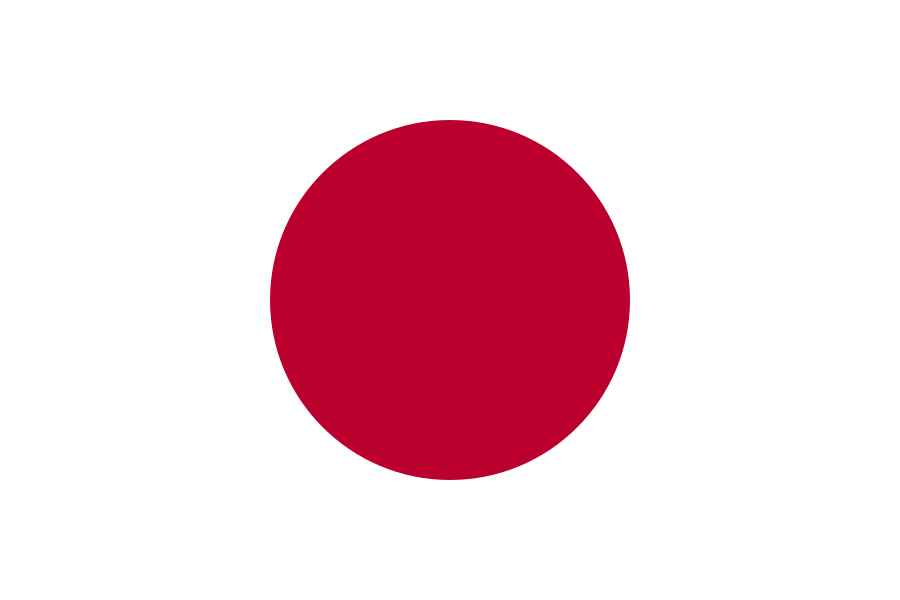
 Japan
Quick answerJapan is a country in Eastern Asia, with a population of 122,950,000 (2026). Its capital is Tokyo, its official language is Japanese, and its currency is the Japanese yen (JPY). It covers 377,975 square kilometres (145,937 square miles), and its time zone is Asia/Tokyo.
Japan is an island country in East Asia, home to about 123 million people. Its capital is Tokyo, its national language is Japanese, and its currency is the yen.
Key facts
| Capital | Tokyo |
|---|---|
| Population | 122,950,000 (2026) · 123.0 million |
| Population density | 337.3 people per km² (land area) |
| Area | 377,975 km² (145,937 sq mi) total · 364,485 km² (140,728 sq mi) land |
| Official language | Japanese (official) |
| Currency | Japanese yen (JPY, ¥) |
| Time zone | Asia/Tokyo |
| Government | Unitary parliamentary constitutional monarchy |
| Coastline | 29,751 km |
| Highest point | Mount Fuji, 3,776 m |
| Life expectancy | 85 years (2020) |
| Calling code | +81 |
| Driving side | Left |
| Internet domain | .jp |
Overview
Japan is an island country in East Asia, made up of four large islands — Honshu, Hokkaido, Kyushu and Shikoku — and more than 14,000 smaller ones. It stretches along the Pacific coast of Asia, separated from the mainland by the Sea of Japan, the Sea of Okhotsk and the East China Sea. The country covers 377,975 square kilometres, and about three-quarters of its land is mountainous and heavily forested, so most people live on the narrow coastal plains. Mount Fuji, an active volcano that last erupted in 1707–1708, rises to 3,776 metres and is the country's highest point. Japan has no land borders: its coastline runs for 29,751 kilometres around the islands.
About 122.95 million people lived in Japan on 1 January 2026, according to the Statistics Bureau of Japan, making it the world's 11th most populous country. The population peaked at 128.5 million in 2010 and has fallen every year since, as Japan has one of the world's lowest birth rates and one of the oldest populations: more than 29% of people were over 65 in 2025. Life expectancy at birth was 85 years in 2020, among the highest in the world. Most Japanese live in cities, above all in the Tokyo metropolitan area, which had about 37.3 million people in the 2015 census — one of the largest metropolitan areas on Earth. Japanese is the national language, and the country is divided into 47 prefectures.
Japan is a unitary parliamentary constitutional monarchy. The Emperor is head of state, and the National Diet makes the laws. Japan is a developed country and the world's fourth-largest economy, worth about $4.0 trillion in 2024, built on cars, electronics, robotics and other high technology. Its culture is known around the world, from sushi and cherry blossom to anime, manga and video games. Japan is the only Asian member of the G7, and a major centre of science and engineering, from high-speed rail to space research.
Notable facts
- Japan consists of more than 14,000 islands, but four — Honshu, Hokkaido, Kyushu and Shikoku — hold almost all of its land and people.
- Mount Fuji, at 3,776 metres, is Japan's highest mountain and an active volcano that last erupted in 1707–1708.
- Japan's population was 122,950,000 on 1 January 2026, down from a peak of 128.5 million in 2010.
- Life expectancy at birth in Japan was 85 years in 2020, the highest in the world.
- Japan drives on the left, one of the few countries outside the former British Empire to do so.
How Japan compares
Comparison table — Japan next to 3 similar countries (neighbours first, then the same subregion).
| Country | Population | Area | Density | Capital |
|---|---|---|---|---|
| Japan ★ | 122,950,000 (2026) | 377,975 km² | 337.3 people per km² | Tokyo |
| Australia | 27,801,023 (2025) | 7,692,024 km² | 3.6 people per km² | Canberra |
| Brazil | 213,421,037 (2025) | 8,515,767 km² | 25.2 people per km² | Brasília |
| Canada | 41,798,407 (2026) | 9,984,670 km² | 4.6 people per km² | Ottawa |
Cities in Japan
- Tokyo 14,254,039 people (2025) · Capital Known for Tokyo Skytree
- Yokohama 3,759,595 people (2023) Known for Japan's largest Chinatown
- Osaka 2,816,247 people (2025) Known for Osaka Castle
- Nagoya 2,337,864 people (2025) Known for Nagoya Castle
Frequently asked questions
What is the capital of Japan?
The capital of Japan is Tokyo. About 14.25 million people live in the Tokyo Metropolis (May 2025), and the wider Kantō metropolitan area had about 37.3 million in the 2015 census. Tokyo has been the seat of the Emperor and the government since 1868, when the city was renamed from Edo.
What is the population of Japan?
Japan had a population of 122,950,000 on 1 January 2026, according to the Statistics Bureau of Japan. That makes it the world's 11th most populous country. The population peaked at 128.5 million in 2010 and has been falling since, as Japan has one of the world's lowest birth rates.
What language is spoken in Japan?
Japanese is the national language of Japan, spoken by almost everyone in the country. It is the language of government, schools and the media. Regional languages such as Ainu and the Ryukyuan languages are also spoken, and English is widely taught in schools as a foreign language.
What currency is used in Japan?
Japan uses the yen (JPY, symbol ¥). It is one of the world's most traded currencies. Coins and banknotes are still widely used, and cash remains common in shops and restaurants, though cards and mobile payments are now accepted in most cities.
Where is Japan?
Japan is an island country in East Asia, in the Pacific Ocean off the north-east coast of Asia. It lies east of the Korean Peninsula, across the Sea of Japan, and north-east of China. The country is an archipelago of more than 14,000 islands, with four large islands holding almost all its people.
What time zone is Japan in?
Japan uses Japan Standard Time (JST, UTC+9) all year round, and does not observe daylight saving. The IANA time zone name is Asia/Tokyo. Japan is nine hours ahead of Greenwich Mean Time, so noon in London is 9 p.m. the same day in Tokyo.
Quick quiz
Three questions from the facts on this page. No sign-up, no score is saved.
Keep exploring
- Tokyo — capital of Japan
- Yokohama — city in Japan
- Osaka — city in Japan
- Nagoya — city in Japan
- All countries — the full list
Sources & last updated
- Wikipedia — Japan
- Wikipedia — Mount Fuji
- Wikipedia — List of metropolitan areas in Japan
- Wikipedia — List of countries by GDP (nominal)
- mledoze/countries (GitHub) — skeleton fields
Last updated: . Figures are shown with their year; where sources disagree, the value is left out rather than estimated.