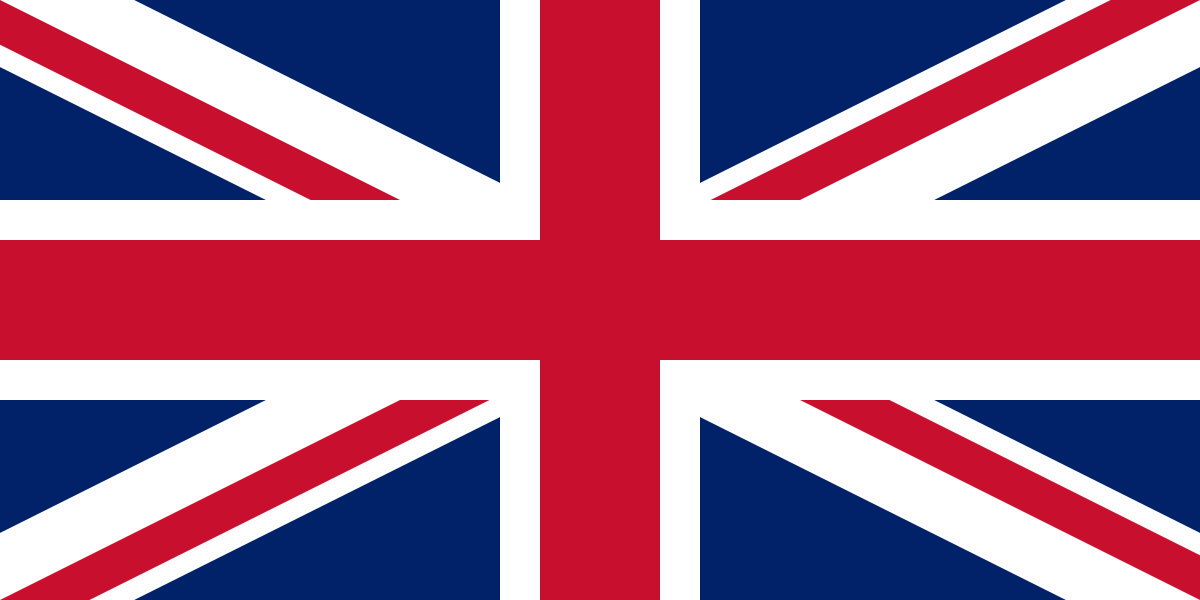
 United Kingdom
Quick answerThe United Kingdom is a country in Northern Europe, with a population of 69,483,939 (2025). Its capital is London, its official language is English, and its currency is the Pound sterling (GBP). It covers 244,376 square kilometres (94,354 square miles), and its time zone is Europe/London.
The United Kingdom is an island country in north-western Europe, made up of England, Scotland, Wales and Northern Ireland. About 69.5 million people lived there in 2025. Its capital and largest city is London, its official language is English, and its currency is the pound sterling.
Key facts
| Capital | London |
|---|---|
| Population | 69,483,939 (2025) · 69.5 million |
| Population density | 286.5 people per km² (land area) |
| Area | 244,376 km² (94,354 sq mi) total · 242,494 km² (93,627 sq mi) land |
| Official language | English (official) |
| Currency | Pound sterling (GBP, £) |
| Time zone | Europe/London |
| Government | Unitary parliamentary constitutional monarchy |
| Coastline | 12,429 km |
| Highest point | Ben Nevis, 1,345 m |
| Life expectancy | 81.4 years (2024) |
| Calling code | +44 |
| Driving side | Left |
| Internet domain | .uk |
Overview
The United Kingdom covers 244,376 square kilometres, including the island of Great Britain, the north-eastern part of the island of Ireland and many smaller islands. It lies off the north-western coast of mainland Europe, surrounded by the Atlantic Ocean, the North Sea, the English Channel and the Irish Sea. Its only land border is with Ireland. The island of Great Britain is divided between England, Scotland and Wales, while Northern Ireland shares the island of Ireland with the Republic of Ireland. The landscape ranges from the mountains of the Scottish Highlands, where Ben Nevis rises to 1,345 metres, to the rolling hills of southern England, and its coastline measures about 12,429 kilometres.
About 69.5 million people lived in the United Kingdom in 2025, according to the Office for National Statistics. London, the capital and largest city, had about 9.1 million residents, followed by Birmingham with about 1.2 million and Leeds with about 0.8 million. English is the national language, while Welsh, Scottish Gaelic and Irish have official status in parts of the country. Life expectancy at birth was 81.4 years in 2024, according to the World Bank.
The United Kingdom is a unitary parliamentary constitutional monarchy made up of four countries: England, Scotland, Wales and Northern Ireland. The monarch is head of state, and the prime minister leads the government in Parliament at Westminster. Scotland, Wales and Northern Ireland have their own parliaments or assemblies with powers over devolved matters. The economy, worth about $4.3 trillion in 2026 according to the International Monetary Fund, is one of the largest in the world, built on services, finance, manufacturing and creative industries. The United Kingdom is a member of the Commonwealth, NATO and the G7. The country is known for its literature, music, sport and science, and for landmarks such as Stonehenge, Edinburgh Castle and the Tower of London.
Notable facts
- The United Kingdom covers 244,376 square kilometres, including the island of Great Britain, the north-eastern part of Ireland and many smaller islands.
- Ben Nevis, in Scotland, rises to 1,345 metres, the highest point in the British Isles.
- The United Kingdom had a population of 69,483,939 in 2025, according to the Office for National Statistics.
- London, the capital and largest city, had about 9.1 million residents in 2025, and its metropolitan area held about 15.4 million people.
- Life expectancy at birth in the United Kingdom was 81.4 years in 2024, according to the World Bank.
How the United Kingdom compares
Comparison table — the United Kingdom next to 3 similar countries (neighbours first, then the same subregion).
| Country | Population | Area | Density | Capital |
|---|---|---|---|---|
| United Kingdom ★ | 69,483,939 (2025) | 244,376 km² | 286.5 people per km² | London |
| Iceland | 392,404 (2025) | 103,000 km² | 3.9 people per km² | Reykjavík |
| Norway | 5,633,770 (2026) | 323,802 km² | 18.5 people per km² | Oslo |
| Australia | 27,801,023 (2025) | 7,692,024 km² | 3.6 people per km² | Canberra |
Cities in the United Kingdom
See all 4 cities in the United Kingdom →
- London 9,122,909 people (2025) · Capital Known for Tower of London
- Birmingham 1,176,960 people (2025) Known for Industrial Revolution heritage
- Manchester 588,256 people (2025) Known for World's first industrialised city
- Edinburgh 531,370 people (2025) Known for Edinburgh Castle
Frequently asked questions
What is the capital of the United Kingdom?
The capital of the United Kingdom is London, on the River Thames in south-east England. It is also the capital of England and the country's largest city, with about 9.1 million people in 2025. London is the seat of the UK Parliament and government, and is home to the Tower of London, Buckingham Palace and the British Museum.
What is the population of the United Kingdom?
The United Kingdom had a population of 69,483,939 in 2025, according to the Office for National Statistics. It is one of the most populous countries in Europe, and about 13 in every 100 people in the UK live in London. England is by far the most populous of the UK's four constituent countries.
What language is spoken in the United Kingdom?
English is the national language of the United Kingdom and is spoken by almost everyone in the country. It is the language of government, schools and the media. Welsh is an official language in Wales, Scottish Gaelic has official status in Scotland, and Irish is recognised in Northern Ireland.
What currency is used in the United Kingdom?
The United Kingdom uses the pound sterling (GBP, symbol £). The pound is divided into 100 pence and is issued by the Bank of England. It is one of the world's most traded currencies, and it is also used in the Crown Dependencies and some British Overseas Territories.
Where is the United Kingdom?
The United Kingdom is in north-western Europe, off the coast of mainland Europe. It comprises the island of Great Britain, the north-eastern part of the island of Ireland, and many smaller islands. It is surrounded by the Atlantic Ocean, the North Sea, the English Channel and the Irish Sea, and its only land border is with Ireland.
What time zone is the United Kingdom in?
The United Kingdom uses Greenwich Mean Time (GMT, UTC+0) in winter and British Summer Time (BST, UTC+1) from the last Sunday in March to the last Sunday in October. London is the home of the Greenwich Meridian, the line of zero longitude from which all other time zones are measured. The whole country uses the same time zone.
Quick quiz
Three questions from the facts on this page. No sign-up, no score is saved.
Keep exploring
- London — capital of the United Kingdom
- Birmingham — city in the United Kingdom
- Manchester — city in the United Kingdom
- Edinburgh — city in the United Kingdom
- Ireland — neighbouring country (page coming soon)
- Charles Darwin — English science figure
- Isaac Newton — English science figure
- William Shakespeare — English literature figure
- “All the world's a stage, and all the men and women merely players.” — quote by William Shakespeare
- “I do not know what I may appear to the world, but to myself I seem to have been only like a boy playing on the sea-shore, and diverting myself in now and then finding a smoother pebble or a prettier shell than ordinary, whilst the great ocean of truth lay all undiscovered before me.” — quote by Isaac Newton
- Iceland — another country in Northern Europe
- Norway — another country in Northern Europe
- All countries — the full list
Sources & last updated
- Wikipedia — United Kingdom
- Office for National Statistics, National life tables — life expectancy in the UK: 2022 to 2024
- World Bank, World Development Indicators — life expectancy at birth, United Kingdom
- Wikipedia — Coastline of the United Kingdom
Last updated: . Figures are shown with their year; where sources disagree, the value is left out rather than estimated.