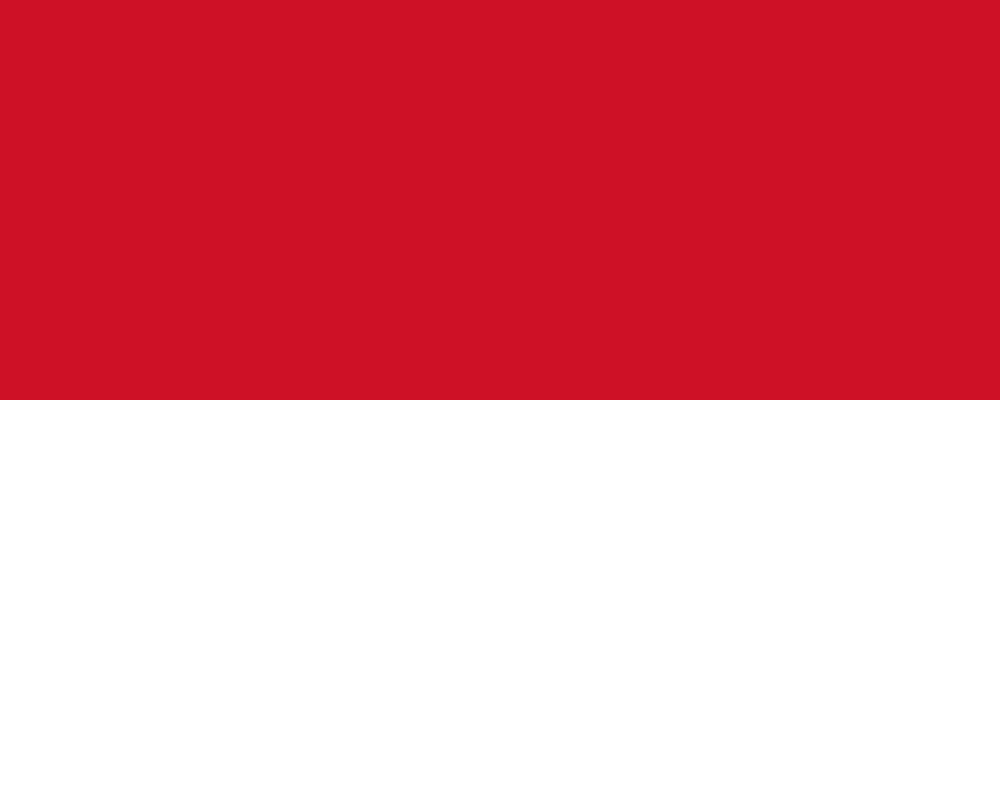
 Monaco
Quick answerMonaco is a country in Western Europe, with a population of 38,857 (2025). Its capital is Monaco, its official language is French, and its currency is the Euro (EUR). It covers 2.084 square kilometres (1 square miles), and its time zone is Europe/Monaco.
Monaco is the second-smallest country in the world, a city-state of about 38,900 people on the French Riviera. Its capital is the city of Monaco itself, its official language is French, and its currency is the euro.
Key facts
| Capital | Monaco |
|---|---|
| Population | 38,857 (2025) · 0.0 million |
| Population density | 18645.4 people per km² (land area) |
| Area | 2.084 km² (1 sq mi) total · 2.084 km² (1 sq mi) land |
| Official languages | French (official), Italian, Monégasque |
| Currency | Euro (EUR, €) |
| Time zone | Europe/Monaco |
| Government | Unitary parliamentary semi-constitutional monarchy |
| Coastline | 3.83 km |
| Highest point | Chemin des Révoires, 164 m |
| Life expectancy | 86.4 years (2023) |
| Calling code | +377 |
| Driving side | Right |
| Internet domain | .mc |
Overview
Monaco is a city-state on the French Riviera in Western Europe, the second-smallest country in the world after Vatican City. It covers just 2.084 square kilometres and is bordered by France on its north, east and west sides, with the Mediterranean Sea to the south; Italy lies about 15 kilometres to the east. Monaco has no separate capital city: the whole country is a single city, and its government offices sit in Monaco-Ville, the old town on the Rock. Its best-known quarters are Monte Carlo, home to the famous casino, and La Condamine, around the harbour. The highest point, on the Chemin des Révoires, is 164 metres above sea level, and the coastline, the shortest of any non-landlocked country, measures 3.83 kilometres.
About 38,857 people lived in Monaco at the 2025 census, according to IMSEE (Monaco Statistics), making it the most densely populated sovereign state in the world. Fewer than 10,000 residents are Monégasque nationals; the rest come from many countries, above all France and Italy. French is the official language, and Italian and Monégasque are widely spoken. The whole population is urban: Monaco has no countryside at all. Life expectancy was 86.4 years in 2023, according to the United Nations, among the highest in the world.
Monaco is a unitary parliamentary semi-constitutional monarchy. Prince Albert II is head of state, and the House of Grimaldi has ruled the principality, with brief interruptions, since 1297. Monaco is not a member of the European Union, but it uses the euro, and its defence is the responsibility of France. The principality became famous in the 19th century, when the Monte Carlo Casino opened and a railway linked it to Paris, and it is still known for wealth: it levies no personal income tax on most residents, and over 30 per cent of residents are millionaires. Each year its streets become the circuit for the Monaco Grand Prix, one of the original Formula One races, and the harbour fills with yachts.
Notable facts
- Monaco is the second-smallest country in the world, after Vatican City, and the most densely populated sovereign state.
- Monaco's population was 38,857 at the 2025 census, according to IMSEE (Monaco Statistics).
- Monaco has the world's shortest coastline of any non-landlocked country, at 3.83 kilometres.
- The House of Grimaldi has ruled Monaco, with brief interruptions, since 1297.
- Monaco levies no personal income tax on most residents; French citizens living there are the exception.
How Monaco compares
Comparison table — Monaco next to 3 similar countries (neighbours first, then the same subregion).
| Country | Population | Area | Density | Capital |
|---|---|---|---|---|
| Monaco ★ | 38,857 (2025) | 2.084 km² | 18645.4 people per km² | Monaco |
| France | 68,720,337 (2025) | 551,695 km² | 126.3 people per km² | Paris |
| Germany | 83,467,117 (2025) | 357,114 km² | 238.9 people per km² | Berlin |
| Australia | 27,801,023 (2025) | 7,692,024 km² | 3.6 people per km² | Canberra |
Cities in Monaco
Frequently asked questions
What is the capital of Monaco?
Monaco has no separate capital city, because the whole country is a single city-state. The city of Monaco is country and capital in one, and the government offices sit in Monaco-Ville, the old town on the Rock. Monte Carlo, the quarter around the casino, is the largest settlement, but it is a district of the city, not a separate town.
What is the population of Monaco?
Monaco had a population of 38,857 at the 2025 census, according to IMSEE (Monaco Statistics). That makes it one of the smallest countries in the world by population, and because everyone lives in just 2.084 square kilometres, it is also the most densely populated sovereign state. Fewer than 10,000 residents are Monégasque nationals.
What language is spoken in Monaco?
French is the official language of Monaco and is spoken by almost everyone in the principality. Italian and Monégasque, the traditional local language, are also widely spoken and understood. English is common too, especially in the hotels, restaurants and businesses that serve the many visitors and foreign residents.
What currency is used in Monaco?
Monaco uses the euro (EUR, symbol €). Although Monaco is not a member of the European Union, it uses the euro through its relationship with France, which handles the principality's defence and customs. Euro coins and banknotes are the same ones used in France and across the rest of the eurozone.
Where is Monaco?
Monaco is on the French Riviera in Western Europe, on the Mediterranean coast of southern France. It is bordered by France on its north, east and west sides, and the Italian region of Liguria lies about 15 kilometres to the east. The principality sits on steep hillsides above the sea, between Nice and the Italian border.
What time zone is Monaco in?
Monaco uses Central European Time (CET, UTC+1) in winter and Central European Summer Time (CEST, UTC+2) from the last Sunday in March to the last Sunday in October. The IANA time zone name is Europe/Monaco. Monaco keeps the same time as France, so it is one hour ahead of London in winter.
Quick quiz
Three questions from the facts on this page. No sign-up, no score is saved.
Keep exploring
- Monaco — capital of Monaco
- France — neighbouring country
- Germany — another country in Western Europe
- All countries — the full list
Sources & last updated
- Wikipedia — Monaco
- IMSEE (Monaco Statistics) — Population census
- Government of Monaco — Monaco en Chiffres 2025, Territory and Environment (area 2.084 km²)
- Wikipedia — List of countries by life expectancy (United Nations, 2023: Monaco 86.37 years)
- World Bank, World Development Indicators SP.URB.TOTL.IN.ZS (urban population 100.0%)
- Encyclopædia Britannica — Monaco (no separate area distinguished as capital)
- RAC — Driving in Monaco (drives on the right)
- mledoze/countries (skeleton: area, borders, capital, languages, currency, demonym, calling code, landlocked, coordinates, region, tld)
Last updated: . Figures are shown with their year; where sources disagree, the value is left out rather than estimated.